
Sunny’s Summer Pet Care Tips
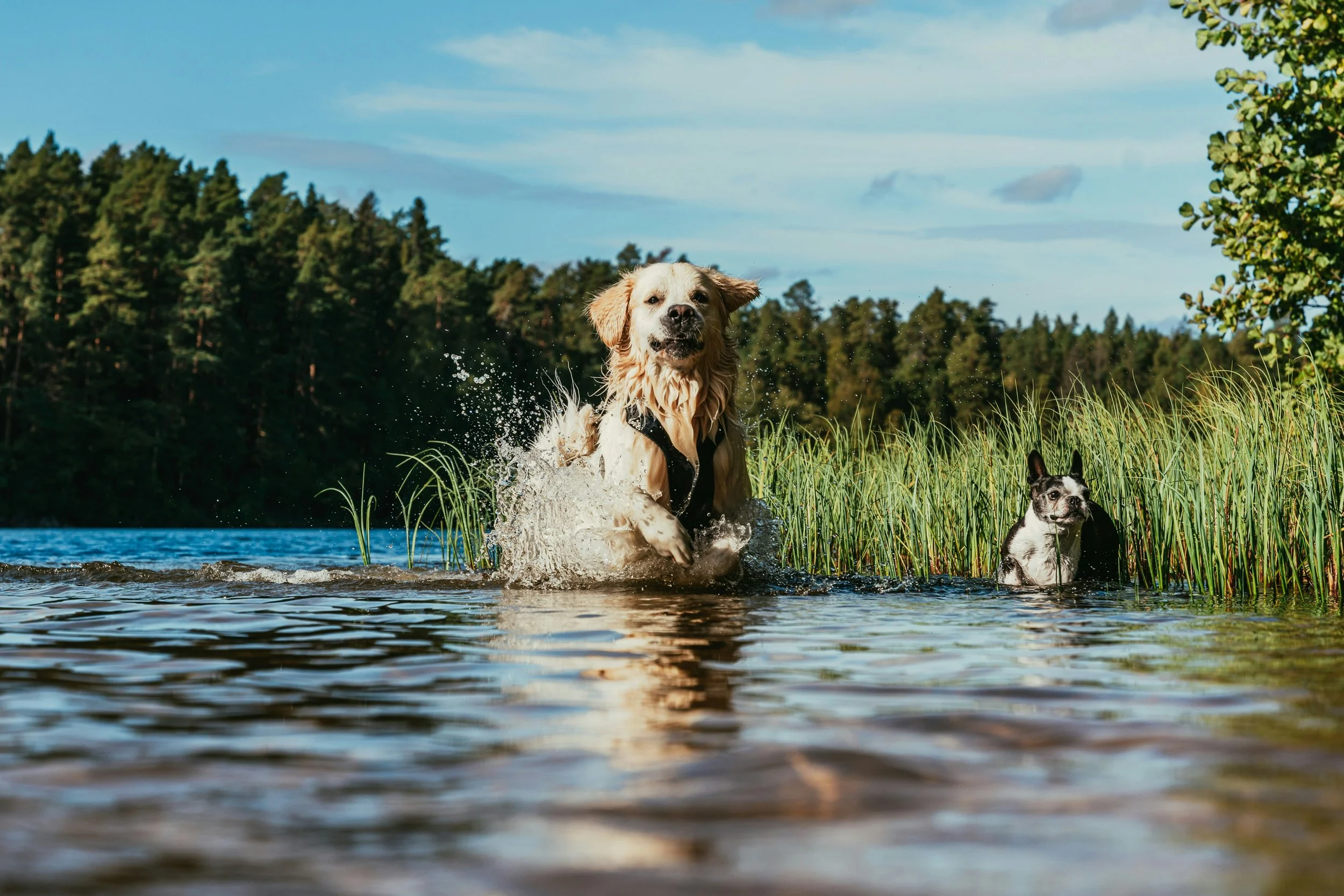
Here in Southeast Minnesota, summer means high humidity alongside the heat, a combination that can sneak up on even the most attentive pet owner. Whether you’re heading out to Quarry Hill, Soldiers Field Park, or just your own backyard, your pets are counting on you to help them stay safe when the thermometer climbs!
We put together this guide drawing on resources from veterinary experts and animal welfare organizations so you have a clear seasonal checklist of simple steps that make a real difference.
A note from our veterinary partner: This guide has been reviewed in partnership with our local veterinary team. If you ever have specific concerns about your pet’s health during hot weather, please don’t hesitate to call your vet directly.
Understanding heat risks for pets:
Dogs and cats can’t cool themselves the way we do. Dogs rely almost entirely on panting to regulate their body temperature. They only have sweat glands on their paw pads. When the air is already humid (hello, Minnesota July), panting becomes far less effective.
So, who is most at risk?
All pets are vulnerable in the heat, but keep extra watch on: short-nosed breeds (Pugs, Bulldogs, French Bulldogs, Boxers, Boston Terriers) who can’t pant efficiently; senior pets and puppies/kittens; overweight animals; pets with heart or respiratory conditions; and animals with thick or dark-colored coats.
If your pet falls into any of these categories, be especially conservative about heat exposure this summer.
Know the signs of heat stroke:
Heatstroke is a life-threatening emergency.
Early warning signs include heavy panting, drooling, seeking shade, and reluctance to move. If you see these signs, bring your pet into cool air conditioning with access to water and wet them down with cool (not ice cold) water immediately.
Call your vet or go directly to an emergency animal hospital if you notice any of the following:
Excessive panting that won’t stop
Vomiting or bloody diarrhea
Confusion or disorientation
Glazed eyes
Difficulty breathing
Weakness or stumbling
Seizures or collapse
Pale or deep red gums
Do not wait to see if it improves on its own. These are emergency signs.
10 tips to keep your pets cool this summer:
Time Your Walks for Cooler Hours
Walk your dog early in the morning or after 6 p.m. The hottest part of a Minnesota summer day typically falls between 3 and 5 p.m., long after the sun is highest. Even an hour’s difference can make walks significantly more comfortable and safer for your dog.Test the Pavement Before You Step Out
Asphalt holds heat and can reach temperatures far above the air temperature. Here’s a simple rule: press the back of your hand flat on the pavement for 10 seconds. If you can’t hold it there comfortably, it’s too hot for your dog’s paws. Burned paw pads are painful and slow to heal. Stick to grass, shaded paths, or protective booties if the pavement is unavoidable.Always Bring Water
Never leave the house without fresh water and a collapsible bowl for your dog. Even a short walk in summer heat can dehydrate a pet quickly. Offer water frequently and don’t wait for your dog to show signs of thirst. At home, keep multiple water bowls in cool areas and refresh them throughout the day.Never Leave a Pet in a Parked Car
This one cannot be overstated. On a 70°F day, the interior of a parked car can reach over 110°F within an hour, and the sharpest temperature rise happens in the first 15 to 30 minutes. Cracking a window does not meaningfully help. Even leaving a car running with the air conditioner on is not safe. Engines can cut out, and dogs can be stolen. If your pet can’t come inside with you, leave them at home.Provide Shade and Airflow Outdoors
If your pet spends time outside, they need access to genuine shade, not just a sunny yard. Trees, covered porches, or shade structures all work. Pair shade with airflow: a fan positioned to move air around outdoor rest areas can make a significant difference. Avoid leaving pets outside during peak heat hours, even with shade available.Create Cool Spaces Indoors
Air conditioning is the gold standard. If your home doesn’t have central AC, set up fans in a room with good ventilation and keep blinds or curtains closed to block direct sunlight. Cooling mats, damp towels for pets to lie on, and ceramic tile floors are also popular ways to help pets find relief. Keep fresh water nearby at all times.Let Pets Play in Water
Many dogs love a shallow kiddie pool, a garden sprinkler, or a trip to a dog-friendly water spot. Water play is one of the most effective and enjoyable ways to keep dogs cool. Even wetting down your pet with cool water from a hose before a walk can help. Just make sure to towel dry double-coated breeds thoroughly afterward to prevent skin issues.Adjust Exercise Intensity
Summer isn’t the time for long runs at midday or high-intensity fetch sessions in full sun. Scale back the duration and intensity of exercise during hot or humid days. If your dog still has energy to burn, mentally stimulating activities like puzzle feeders, training sessions inside, or a cool-morning sniff walk can be just as satisfying without the heat risk.Groom Appropriately, But Don’t Over-Shave
Regular brushing removes dead undercoat and improves airflow close to the skin, especially helpful for double-coated breeds. However, resist the urge to shave your dog down to the skin. A dog’s coat actually provides insulation against both heat and sunburn. When in doubt, consult your groomer or vet about what’s right for your pet’s specific coat type.Keep IDs Current and Microchips Registered
Summer means more open doors, backyard gatherings, and outdoor adventures, all of which raise the chance of a pet slipping away. Before the season gets busy, make sure your pet’s tags are current and that their microchip information is registered and up to date. A few minutes now could make all the difference if your pet ever gets lost.
A note on cats in the summer heat:
Indoor cats are generally safer in summer, but they’re not immune to heat stress, especially in homes without air conditioning. Make sure cats always have fresh, cool water and access to the coolest rooms in the house. Watch for signs of overheating: panting (unusual for cats), lethargy, drooling, or stumbling.
Outdoor cats should have access to shade and fresh water, and you may want to bring them inside during the hottest parts of the day. Cats are better at self-regulating than dogs and will typically seek shade on their own, but in extreme heat, don’t rely on that instinct alone.
Summer storms and tornado preparedness:
Living in SE Minnesota means severe weather is part of the season. Here’s how to make sure your pets are part of your plan if things hit the fan:
Include pets in your family emergency plan. Know in advance where your pets will go in a tornado warning. Designate a safe interior room, typically a basement, bathroom, or interior hallway on the lowest floor, where your whole family, including pets, will shelter.
Build a pet emergency kit. Keep a go-bag for your pet with a 3-day supply of food and water, any medications, copies of vaccination records, a photo of you and your pet together (for proof of ownership if separated), a carrier or leash, and a comfort item like a familiar toy or blanket.
Make sure ID tags and microchips are current. Storms can scatter pets far from home. An up-to-date ID tag and a registered microchip are your best tools for reunion if your pet gets loose during or after a storm.
Don’t leave pets tethered outside during severe weather. If a tornado warning is issued, bring all pets inside immediately. Animals left tied or crated outside have no ability to escape rising water, debris, or wind. Their safety depends on you.
Know where pet-friendly shelters are. Not all emergency shelters accept pets. Research your local options now, before a storm forces the decision. County Emergency Management websites and local humane societies can point you toward resources in your local area.
The trails, parks, and open skies that make living in this region special are even better when you and your pet can enjoy them safely together. A little preparation goes a long way, and most of these steps take just a few minutes to put in place.
Learn more about our services, get involved as a volunteer, or reach out if you or someone you know needs support this summer.

Blog contribution by Sophie Foxman, SHP Communications and Marketing Director.
This blog post was compiled from guidance published by Cornell University College of Veterinary Medicine (Riney Canine Health Center), RSPCA Australia, Greencross Vets, and American Humane Society. It is intended for general educational purposes and does not replace individualized veterinary advice.
